
Cooking for Two Different Diet Plans: The Complete Guide
One vegetarian, one omnivore. One keto, one not. One with allergies, one without. The complete guide to cooking one shared meal for two completely different diets.
The calorie gap is the version of the two-plates problem that gets the most attention — one partner cutting, one bulking, different portions from the same pan. But there is a harder version of the same problem, and it has nothing to do with how much you eat. It is about what you eat.
One of you is vegetarian. The other eats meat. One of you is keto; the other needs carbs. One of you has a dairy allergy; the other lives on cheese. These are not portion differences — they are ingredient differences, and they are the reason most couples end up cooking two separate meals every night.
This guide is the sibling to our one meal, two plates pillar, focused on the dietary mismatch problem. The method is the same at its core: cook one shared base, then let the plates diverge. But the levers are different. When the issue is calories, you move carbs and fats. When the issue is diet type, you move proteins, substitutions, and allergen-safe components.
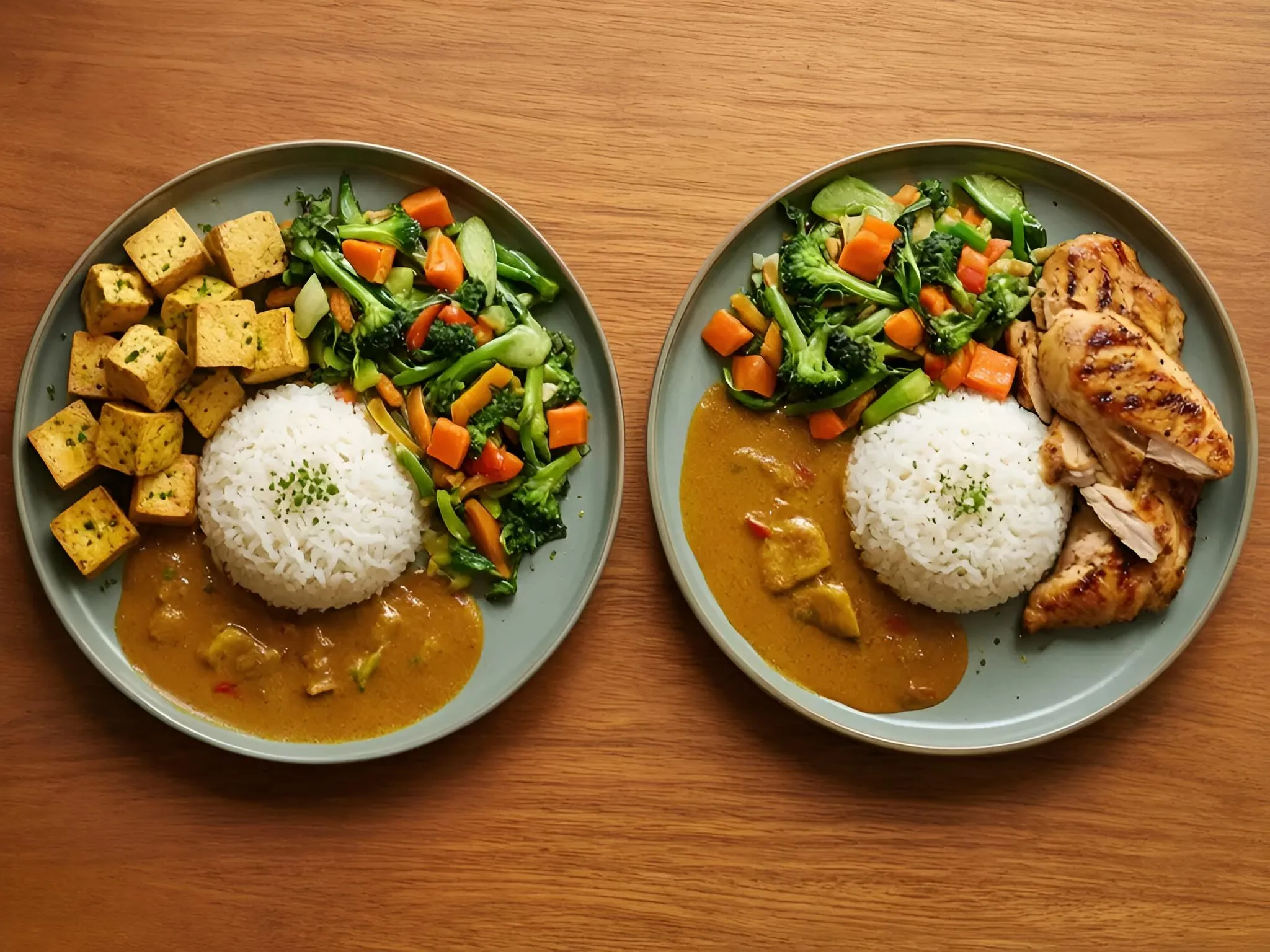
The core principle: shared base, divergent protein
Every dietary mismatch pairing has the same solution shape: build a shared base of carbohydrate, vegetable and sauce, then add the divergent protein or component at the end. The shared cooking step stays the same; the personalisation happens at the plate.
This is easier than it sounds because in most meals, the protein is the only thing that truly differs. A stir-fry is rice, vegetables and sauce — plus chicken for the omnivore, tofu for the vegetarian. A pasta dish is pasta and sauce — plus meatballs for one, lentils for the other. A curry is coconut milk, vegetables and spice — plus chicken for one, chickpeas for the other.
The trick is identifying the shared base and treating the protein as a swappable component, not a fixed ingredient.
The common pairings
Vegetarian and omnivore
The most common dietary mismatch in shared kitchens. One partner does not eat meat; the other does. The solution:
- Cook the shared base vegetarian. Rice, vegetables, sauce — all made without meat. This base works for both partners.
- Add meat to the omnivore’s plate only. A quick pan-fried chicken breast, a piece of fish, a few slices of beef — cooked in the same pan after the shared components come out, in five extra minutes.
- Ensure the vegetarian plate has adequate protein. Tofu, tempeh, lentils, chickpeas, or a plant-based protein — added to the vegetarian plate in place of the meat.
Keto and not
One partner follows a ketogenic diet (very low carbohydrate, high fat); the other eats normally. The solution:
- Cook a shared protein and vegetable base. Steak, chicken, fish, or tofu with roasted or steamed vegetables — all keto-friendly.
- The keto plate stops here. Protein, vegetables, and an extra serving of fat (butter, olive oil, avocado, cheese).
- The non-keto plate adds a carbohydrate. Rice, pasta, potatoes, or bread — served on the side, from a separate pot.
The cooking is shared (protein and veg); the carb is the lever that differentiates the plates. The keto partner does not feel like they are missing out, because their plate is complete on its own. The non-keto partner just adds a starch.
Allergies and not
One partner has a food allergy — dairy, gluten, nuts, shellfish; the other does not. The solution depends on the severity:
- For shared allergies (both partners avoid the allergen): Cook the entire meal allergen-free. Substitutions are widely available for most allergens — dairy-free milk, gluten-free pasta, nut-free spreads.
- For one-partner allergies (only one partner avoids the allergen): Cook the shared base allergen-free, then add the allergen-containing component to the safe partner’s plate only. A dairy-free base with cheese added to one plate at the end; a gluten-free base with regular bread on the side for the partner who can eat it.
Other common pairings
| Pairing | Shared Base | Plate A Gets | Plate B Gets |
|---|---|---|---|
| Vegan and omnivore | Grain, veg, sauce (no animal products) | Tofu / tempeh / lentils | Chicken / fish / beef (pan-fried) |
| Low-FODMAP and not | Low-FODMAP base (no onion, garlic) | As-is | Garlic oil, onion powder on the side |
| Gluten-free and not | GF base (rice, potato, GF pasta) | As-is | Regular bread or regular pasta on the side |
| Pescatarian and omnivore | Grain, veg, sauce | Fish or shrimp | Chicken or beef |
The five-additive-minute rule
The pattern across every pairing is the same: the shared base is cooked to the most restrictive diet in the household, and the less restrictive partner’s plate gets the add-on. The add-on — meat for the omnivore, carbs for the non-keto partner, bread for the gluten-eating partner — takes five minutes or less to prepare in the same pan.
This is the key insight that makes cooking for two diets manageable: you are not cooking two meals. You are cooking one meal and adding five minutes of personalisation at the end.
The shared base does the heavy lifting. The protein swap or the carb addition is a small, fast step that happens after the main cooking is done.
Combining diet differences with goal differences
Many couples face both problems at once — different diets and different calorie targets. One vegetarian partner is cutting at 1,400 calories; the omnivore partner is bulking at 3,000. The methods combine naturally:
- Build the shared base to the most restrictive diet (vegetarian, in this case).
- Add the divergent protein to the omnivore’s plate.
- Plate for calorie targets using the one meal, two plates method — more carbs and fats on the bulk plate, more vegetables on the cut plate.
The layers stack: dietary difference is solved at the ingredient level, calorie difference is solved at the portion level, and both are handled from the same cooking session.
CookTwo’s adaptive cooking engine handles both layers simultaneously — it knows each partner’s diet, allergens, and calorie target, and generates a single recipe that plates two ways. The method above is the manual version; the tool automates the complexity.
Common questions
How do I cook for a vegan and an omnivore without doubling my work?
What if one partner has a severe allergy?
Can this work for more than two diets?
How is this different from the calorie-split version of one meal, two plates?
Do I need separate pans for each diet?
Related reading
- One Meal, Two Plates: The Complete Guide — the sibling pillar on cooking one shared meal for two different calorie or macro goals
- How to Cook One Meal for Two Different Macros — the macro maths for hitting two targets
- How to Meal Prep When One Partner Is Cutting and One Is Bulking — the fitness-couple version, end to end
- Pantry-First Cooking — building these meals from what you already have