
Pantry-First Cooking: Build Meals from What You Already Have
The complete guide to pantry-first cooking for couples — plan meals around what's already in your kitchen, cut food waste, and stop buying ingredients you already own.
The average household throws away roughly 30% of the food it buys. That is not just an environmental problem — it is a budget problem, a planning problem, and most of all a system problem. You buy ingredients with good intentions, half of them go off in the back of the fridge, and then you order takeout because you cannot think of what to cook with what is left.
Pantry-first cooking flips the order. Instead of choosing a recipe and buying the ingredients for it, you look at what you already have and build the meal from there. It is the single most effective way to cut food waste, shrink the grocery bill, and stop the what’s-for-dinner argument in its tracks — because the answer to “what’s for dinner?” is already sitting in your kitchen.
This guide covers the full method: how to inventory your pantry, how to build meals from what is there, and how the approach pairs with the one meal, two plates system so both partners still hit their goals.
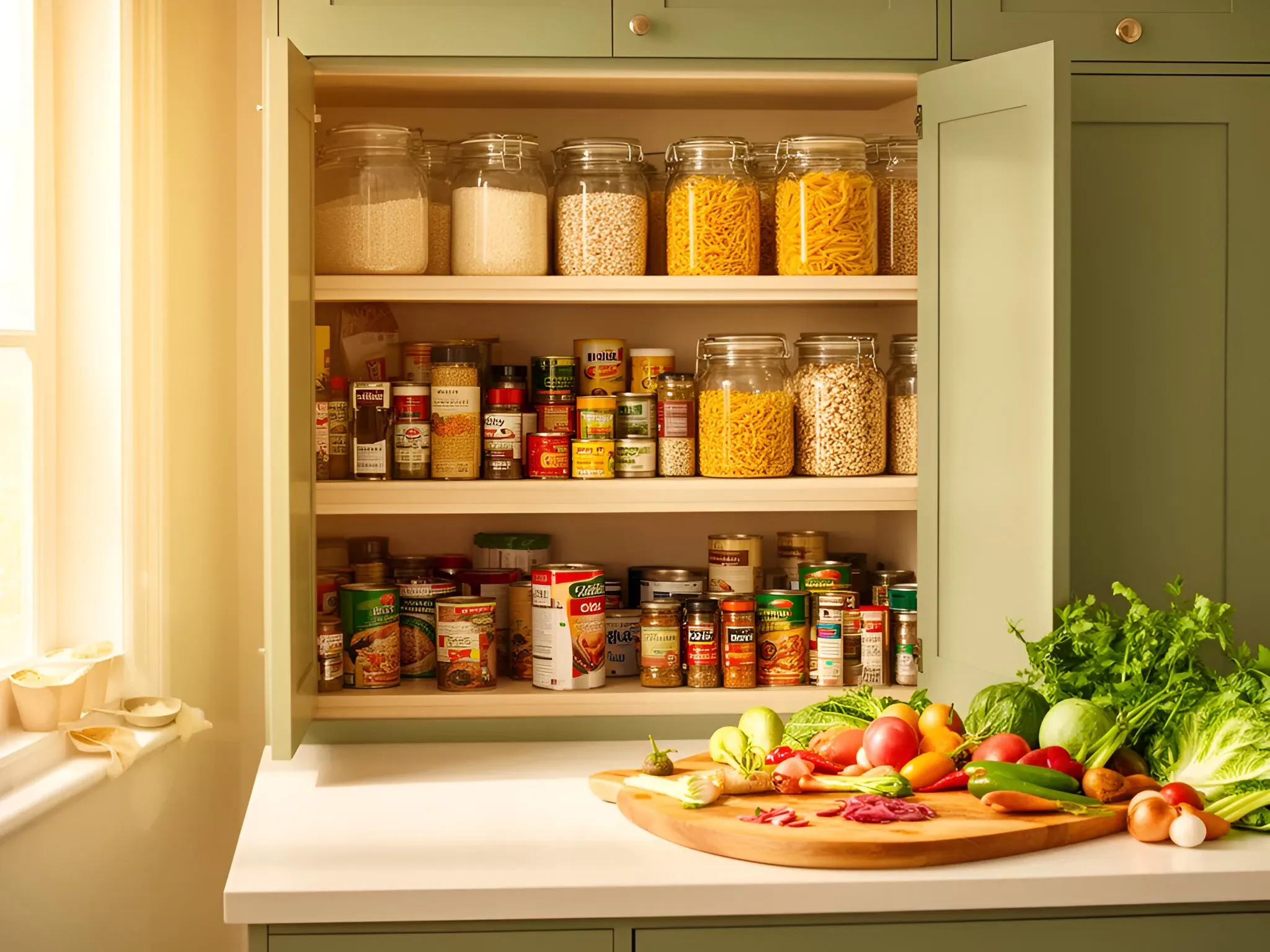
What is pantry-first cooking?
Pantry-first cooking is a meal-planning method where the starting point is the food you already own, not a recipe you found online. You inventory what is in the kitchen — dry goods, tinned goods, freezer items, fresh produce — and build meals around those ingredients, supplementing with a short shopping list only for what is genuinely missing.
The opposite approach — recipe-first — is what most people do by default. You find a recipe, write down every ingredient it calls for, buy them all, cook the dish once, and then watch the remaining half-bunch of coriander and the open jar of capers slowly die in the fridge. The recipe-first approach is why the average fridge contains ingredients that were bought for one specific dish and never used again.
Pantry-first eliminates this. Every ingredient gets used because every ingredient was already there.
The method: inventory, build, supplement
1. Inventory what you have
Before you plan the week’s meals, take ten minutes to look at what is in the kitchen. Group it into categories:
| Category | Examples | Shelf Life |
|---|---|---|
| Dry grains | Rice, pasta, oats, quinoa, flour | Months |
| Tinned goods | Beans, tomatoes, tuna, coconut milk | Years |
| Protein | Chicken, beef, tofu, eggs (fridge/freezer) | Days–months |
| Fresh produce | Vegetables, herbs, fruit | Days–weeks |
| Sauces and fats | Olive oil, soy sauce, stock, spices | Months |
The goal of the inventory is simple: know what you own so you do not buy it again. Most repeat purchases — the second bag of rice, the third jar of paprika — happen because nobody checked the pantry before heading to the shop.
2. Build meals from the inventory
Once you know what is in the kitchen, the meals suggest themselves. The structure is the same modular approach that powers the one meal, two plates method: pick a protein, a carbohydrate, a vegetable, and a sauce or fat.
The difference is the starting point. Recipe-first cooking starts with the dish and works backwards to the ingredients. Pantry-first cooking starts with the ingredients and builds forward:
- You have chicken, rice, and peppers? That is a stir-fry, a curry, or a sheet-pan roast — depending on the sauce.
- You have mince, tinned tomatoes, and pasta? That is a bolognese, a chilli, or a shepherd’s pie — depending on the carb.
- You have eggs, spinach, and cheese? That is a frittata, an omelette, or a breakfast burrito — depending on the time of day.
The same handful of ingredients produces five different meals depending on how you combine and season them. This is why a well-stocked pantry with a dozen core ingredients is more useful than a fridge full of recipe-specific purchases.
3. Supplement with a short shop
The pantry-first shopping list is short by design. You are not buying the full ingredient list for a recipe — you are buying only what the pantry is missing. Usually that means fresh produce, a specific protein, or a single sauce component.
A typical pantry-first shopping list for a week of meals for two:
This week’s shop (supplement only)
Everything else — rice, pasta, tinned tomatoes, beans, spices, oil — is already in the pantry.
How pantry-first pairs with one meal, two plates
The two methods are natural partners. Pantry-first decides what you cook (based on what you have). One meal, two plates decides how you plate it (based on each partner’s goal). Together, they solve both the “what do we have?” problem and the “we eat different amounts” problem in a single system.
The flow looks like this:
- Inventory the pantry. What proteins, carbs, veg and sauces do you have?
- Pick a modular base. Something that splits well at the plating stage — protein, carb, veg, sauce as separate components.
- Cook the full recipe once. Both partners, one pan.
- Plate for two goals. The one meal, two plates method: protein adequate on both, carbs and fats scaled to each target.
- Shop only for what is missing. The next week’s plan starts with the pantry again.
This loop — inventory, cook, plate, supplement — is the system that keeps food waste near zero, the grocery bill low, and both partners on target without cooking separate meals.
The waste-reduction maths
The USDA estimates that 30–40% of the food supply in the United States is wasted, with households being a significant contributor. For a couple spending $150–200 a week on groceries, that translates to $45–80 a week in wasted food — or $2,300–4,100 a year.
Pantry-first cooking cuts this dramatically. When every meal is built from what you already own, ingredients get used before they expire. The fridge stops being a graveyard of half-used sauce jars and wilting herbs. The freezer stops being a black hole of unlabelled containers.
Building a pantry-first kitchen
If you are starting from scratch, here is the foundation — a set of core ingredients that combine into dozens of meals and keep for weeks or months:
Dry goods: rice, pasta, oats, quinoa, flour
Tinned goods: black beans, chickpeas, diced tomatoes, coconut milk, tuna
Fats and oils: olive oil, sesame oil, butter
Sauces and aromatics: soy sauce, stock cubes, garlic, ginger, onion
Spices: paprika, cumin, oregano, chilli flakes, black pepper, salt
Freezer: chicken breast, beef mince, frozen vegetables, frozen fruit for smoothies
With these twenty items plus whatever fresh produce is in the fridge, you can build stir-fries, curries, pasta dishes, sheet-pan roasts, chilli, soups, and breakfast bowls — all without a recipe.
Common questions
What if my pantry is basically empty?
How do I know what is about to go off?
Does this work for couples with different goals?
How is this different from just 'using leftovers'?
Can CookTwo's pantry tracking do this automatically?
Related reading
- One Meal, Two Plates: The Complete Guide — the full method for cooking one shared meal and plating it two ways
- How to Stop the “What’s for Dinner?” Argument — why a shared pantry-first plan ends the nightly stand-off
- Couples Meal Prep Sunday — batching the week’s meals in one cooking session
- Cooking for Two Different Diet Plans — the sibling pillar on dietary mismatch